

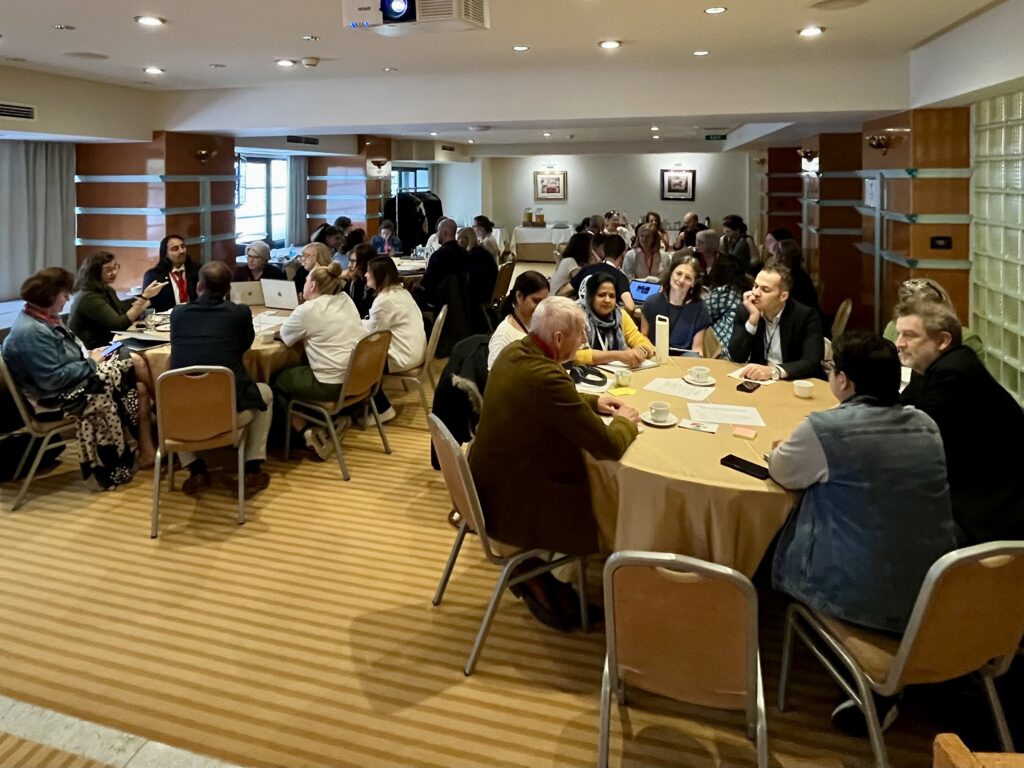
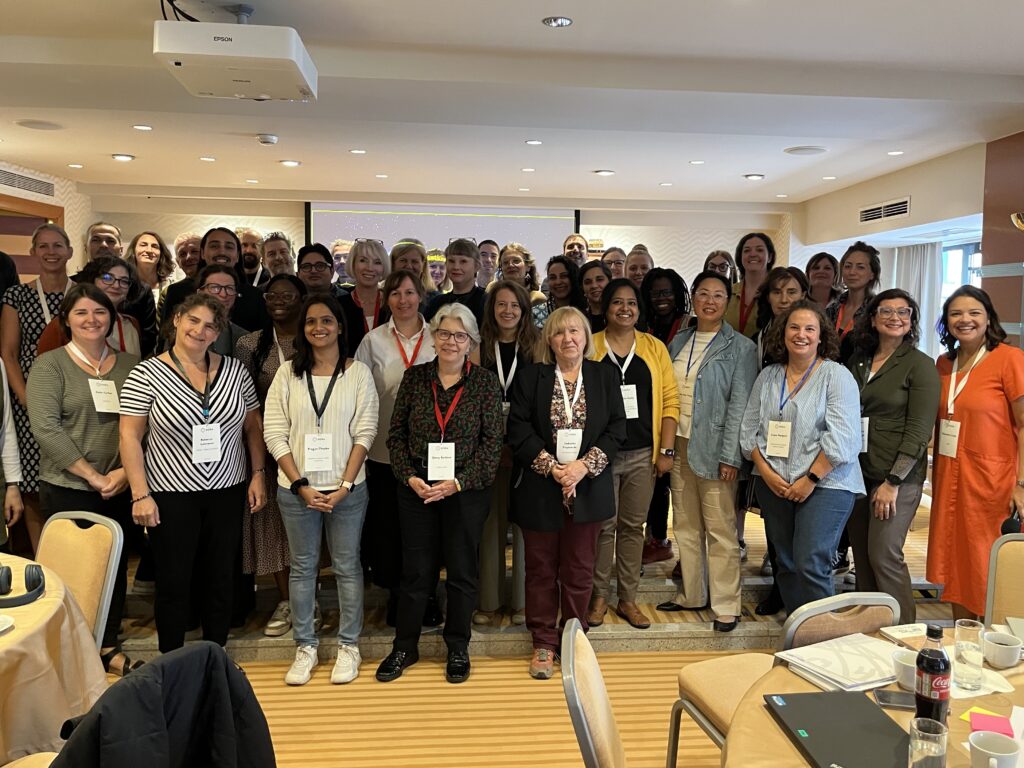
On 24 September 2026, in Zagreb, Croatia, following the Open Access Scholarly Publishing Association (OASPA) Annual Conference, DORA hosted a full-day co-creation workshop to gather community feedback on the upcoming A Practical Guide to Implementing Responsible Research Assessment in Scholarly Communication (SC Guide). The workshop brought together publishers, researchers, funders, librarians, repository managers, and infrastructure providers to explore how scholarly communication organizations can support more responsible, transparent, equitable, and effective approaches to research assessment.
Participants reviewed the draft Guide outline, identified priorities for implementation, and discussed the role of publishing, peer review, metadata, and research infrastructure in shaping what research and researchers are ultimately recognized and rewarded for. The SC Guide is the 3rd in our series of Practical Guides for RRA for key actors in the research system – see the Practical Guides for Research Performing and Research Funding Organizations.
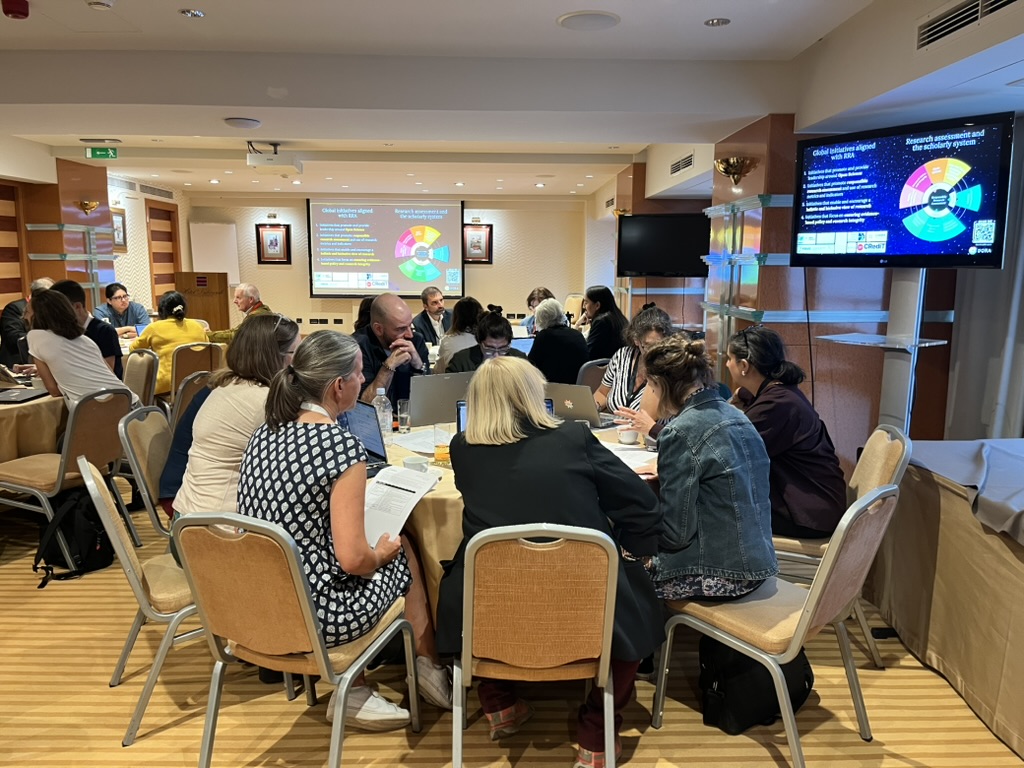
As we have explored in a recent blog and paper, editors, publishers, repositories, infrastructure providers, metadata services, and scholarly communication actors play a critical role in determining what research contributions are made available and can ultimately be assessed and rewarded. As with previous Guides, the aim is to provide a practical, action-oriented resource for actors across the scholarly communication landscape, including publishers, editors, libraries, repository managers, and infrastructure providers.
The Zagreb workshop was a central part of DORA’s approach to co-creation for this Guide, to ensure that it reflects the realities, challenges, and opportunities experienced across the scholarly communication landscape. The workshop brought together more than 40 participants, representing the diversity of scholarly research, including: scholarly publishers including commercial publishers, university presses, society publishers, and Diamond Open Access initiatives; research performing organizations and libraries; infrastructure, standards and metadata providers; research funders and policy bodies, and champions representing ECR voices and global equity, including members of the Global Young Academy (GYA).
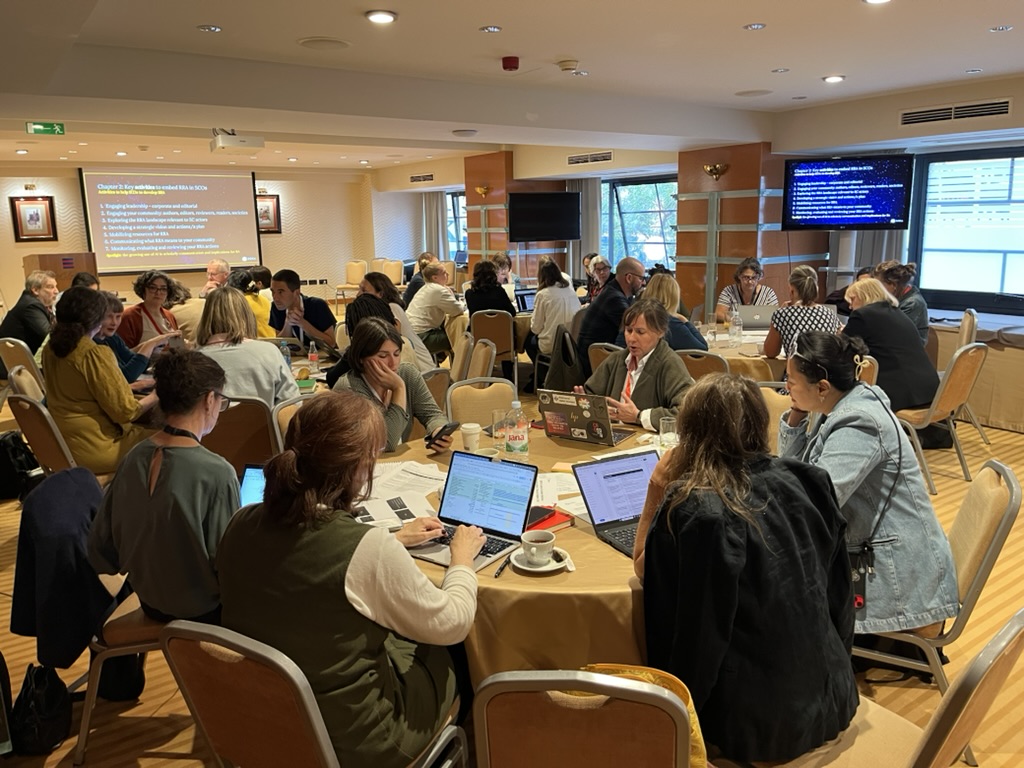
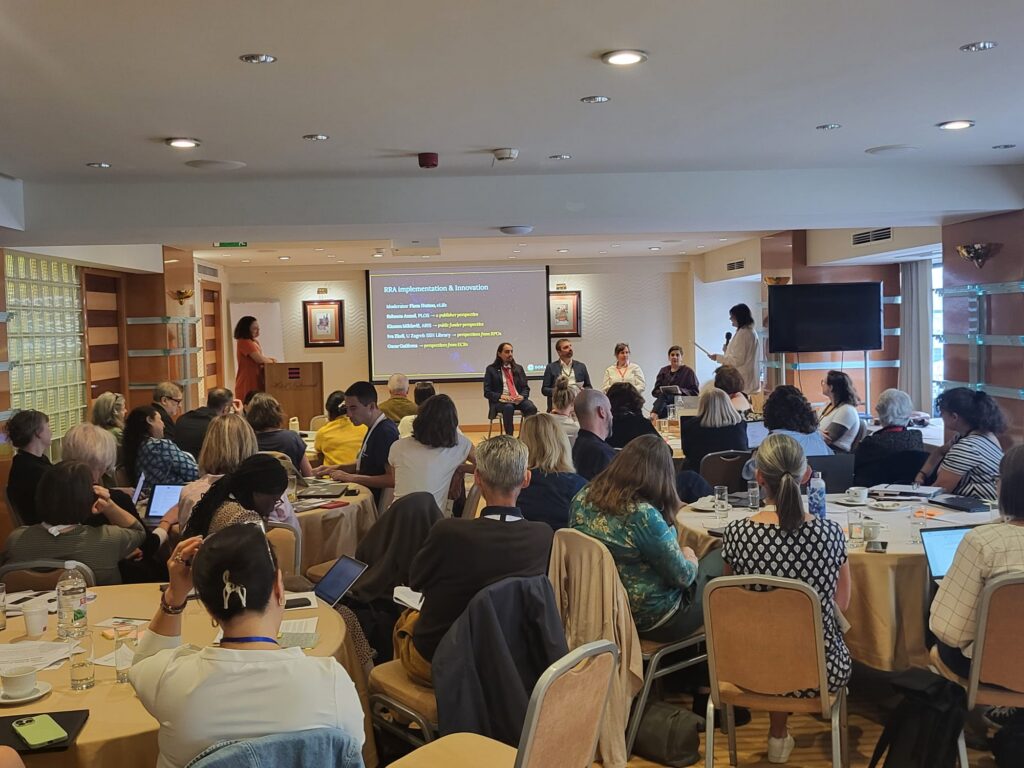
The workshop was designed to be interactive, combining short presentations, panel discussion, and collaborative working sessions to provide input to shape the structure, scope, and priorities of the Guide. The day opened with welcomes from DORA and OASPA, followed by a presentation setting the scene – drawing upon the finding of a recent survey of DORA’s community. This provided the context for a panel discussion exploring how publishers, funders, libraries, infrastructure providers, and researchers experience the opportunities and challenges of implementing responsible research assessment.
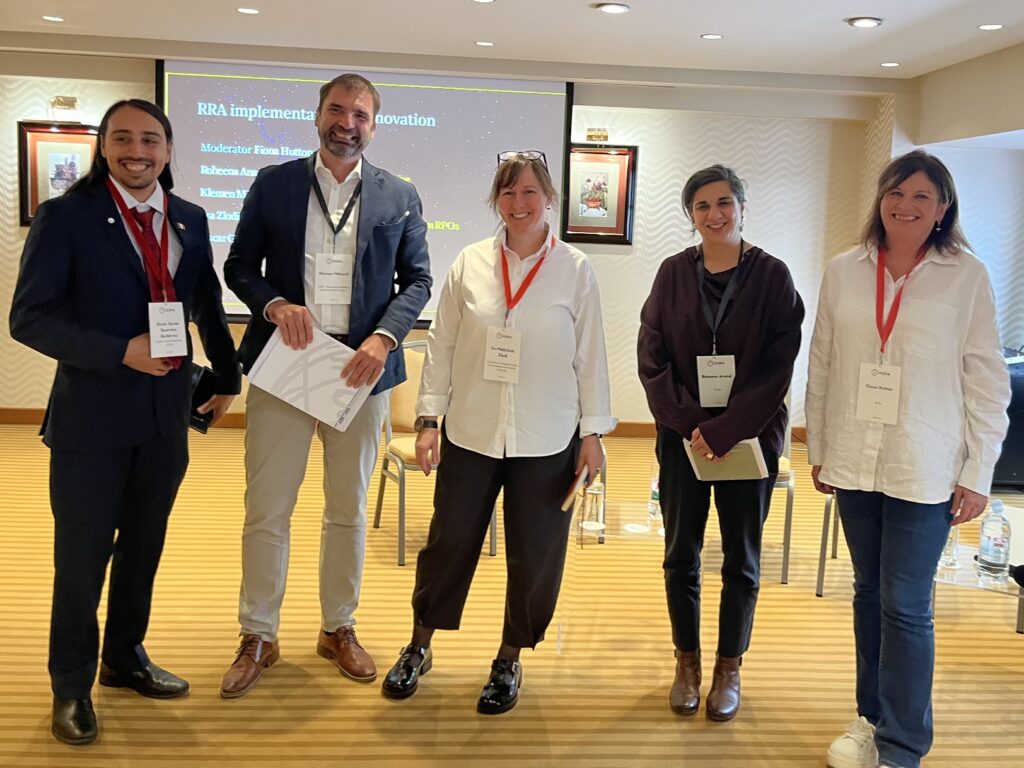
Moderated by Fiona Hutton (Chief Publishing Officer at eLife and DORA Steering Committee member), the opening panel set the stage by bringing together four distinct voices from across the research ecosystem: a publisher, a public funder, an institutional librarian, and an early career researcher. The panel explored perspectives on how scholarly communication practices directly shape research culture, global equity, and institutional incentives.
Opening the panel, Roheena Anand (Executive Director, Global Publishing Development & Sales at PLOS and DORA Executive Board Member) addressed the publisher’s role in responsible research assessment and scholarly communication. She highlighted the growing misalignment between how modern research is conducted and how it is communicated and assessed. To bridge this gap, Publishers must decentralize the article and move towards a structured scholarly record that connects and enables recognition and credit for the broader suite of research outputs (data, code, methods, etc.). that are essential for the understanding and reproducibility of research. In the discussion, Anand also highlighted how publishing systems, workflows, and business models can influence what research is shared, who is able to participate, and which contributions ultimately become visible and valued.
Representing the public funder perspective, Klemen Miklavič (Deputy Director of the Slovenian Research and Innovation Agency (ARIS) and lead for the CoARA National Chapter for Slovenia) shared insights from Slovenia’s national alignment with open science and responsible assessment principles. Miklavič stressed publications remain one of the primary ways funders demonstrate the impact of public investment in research, creating a complex relationship between assessment and scholarly communication reform. While policy mandates can set clear expectations, Miklavič also pointed how qualitative peer review remains the primary engine of evaluation and changing the entrenched habits of evaluation panels requires sustained cultural work. Miklavič also highlighted how emerging developments such as open peer review and platforms such as Open Research Europe can help shift attention away from publication venue and prestige towards the intrinsic quality, relevance, and contribution of the research itself.
Bringing a library, repository, and institutional perspective, Iva Melinščak Zlodi (Scholarly Communication Librarian at the University of Zagreb and SPARC Europe Board Member) focused on the foundational data layer required for reform: CRIS systems, repositories, and persistent identifiers (PIDs like RORs and DOIs). Drawing on her work with national repository networks and Diamond Open Access in Croatia, she observed that universities often lack basic visibility into non-article contributions, making it difficult to evaluate research holistically. In the conversation, Zlodi also noted that while numerous initiatives, frameworks, and standards exist across the ecosystem, they can be complex and often poorly connected, limiting their collective effectiveness.
Providing critical insights from the next generation of scholars, Oscar Xavier Guerrero Gutiérrez (Postdoctoral Researcher at CINVESTAV Mexico and Global Young Academy member) grounded the discussion in the lived realities of early career investigators, particularly in the Global South. He called for rethinking what a researcher is and what is expected of them across different career stages and disciplines while urging leadership to proactively set responsible standards with caution against reform efforts that inadvertently increase administrative burdens on precarious researchers. Guerrero Gutiérrez also encouraged participants to think more broadly about scholarly communication itself, including how research reaches policymakers, communities, practitioners, and other audiences beyond academic publishing.
Across the panelists, a clear message emerged: scholarly communication and research assessment are deeply interconnected, yet the systems that support them remain only partially aligned. Despite representing different parts of the research system, the panelists agreed on several priorities: better coordination, broader recognition of research outputs and contributions, stronger infrastructure and metadata, greater recognition of peer review and other often invisible activities, and avoiding additional burdens for researchers.
Following the panel discussion, participants spent the day in moderated dialogue through interactive sessions examining the draft Guide outline and chapter-by-chapter. Several strong themes emerged across groups.
-
Building community support is needed to secure organizational buy-in
Participants emphasized the importance of engaging communities in making change to established practices and that change rarely begins with senior leadership alone. In scholarly communication, editors, reviewers, librarians, researchers, and scholarly communities often act as the first advocates for reform. In the Guide, participants recommended the inclusion of tools, resources and examples that can be used as talking points and to help engage communities on the value of RRA within their local context.
-
Elevating peer review as a scholarly contribution
There was strong agreement that peer review needs to be more visible and better recognized as an important contribution to research, and that scholarly communication organizations have an opportunity to make this happen. Participants also discussed the potential of open peer review and other transparent evaluation models to make expert assessment more visible, helping researchers, institutions, and funders focus on the substance of research contributions rather than proxy indicators associated with publication venues. It was recommended that the Guide provide guidance and examples of how these approaches might be implemented in practice.
-
Expanding recognition beyond the journal article
Again, it was recognized that SC organizations and actors can play a key role in enabling the visibility of a diversity of research output and content beyond the ‘article’ – including but not limited to, books, datasets, software, preprints, educational resources, multilingual scholarship, open reviews, and community-engaged research. At the same time, there was broad agreement that reforms should avoid creating unnecessary administrative burdens for researchers.
-
Infrastructure and metadata as the enabling layer
Perhaps the strongest point of agreement concerned the importance of metadata, persistent identifiers, and research infrastructure. Participants strongly supported the creation of a final Chapter that focused on the importance of metadata and shared infrastructures to build a connected research ecosystem – and one that provides the foundations for RRA. Persistent identifiers such as DOIs, ORCID iDs, and RORs, together with interoperable and machine-readable metadata, were viewed as essential for making diverse contributions visible, discoverable, and assessable. In the context of generative AI and increasingly automated discovery systems, attendees also highlighted the importance of community-governed infrastructure, trust markers, and transparent metadata as foundations for maintaining confidence in scholarly communication.
The feedback gathered in Zagreb will now inform the next phase of development as DORA continues a broader co-creation process through Task Force discussions and partner-led events. Together, these conversations will help ensure that the final Guide provides practical, actionable support for scholarly communication actors and organizations seeking to implement responsible research assessment. We are grateful to all participants who contributed their expertise, experiences, and ideas throughout the day!
Credits for the photography of the event to event participants.