
Guest post by Singapore Management University
As momentum for responsible research assessment grows globally, attention is increasingly on implementation. In her opening keynote at the 11th Annual FORCE Conference in Singapore, Professor Lily Kong, President of Singapore Management University (SMU), examined how universities can move beyond narrow publication metrics and build systems that value the full range of academic contributions. Reflecting on challenges including researcher wellbeing, societal impact, public engagement and interdisciplinary work, Professor Kong argues that reform must involve not only new approaches to evaluation but also the organisational capacity to support them. Her keynote highlights the importance of plural definitions of excellence and collective action across the research system to create assessment practices that better serve both scholarship and society.
From “Publish or Perish” to Purpose and People
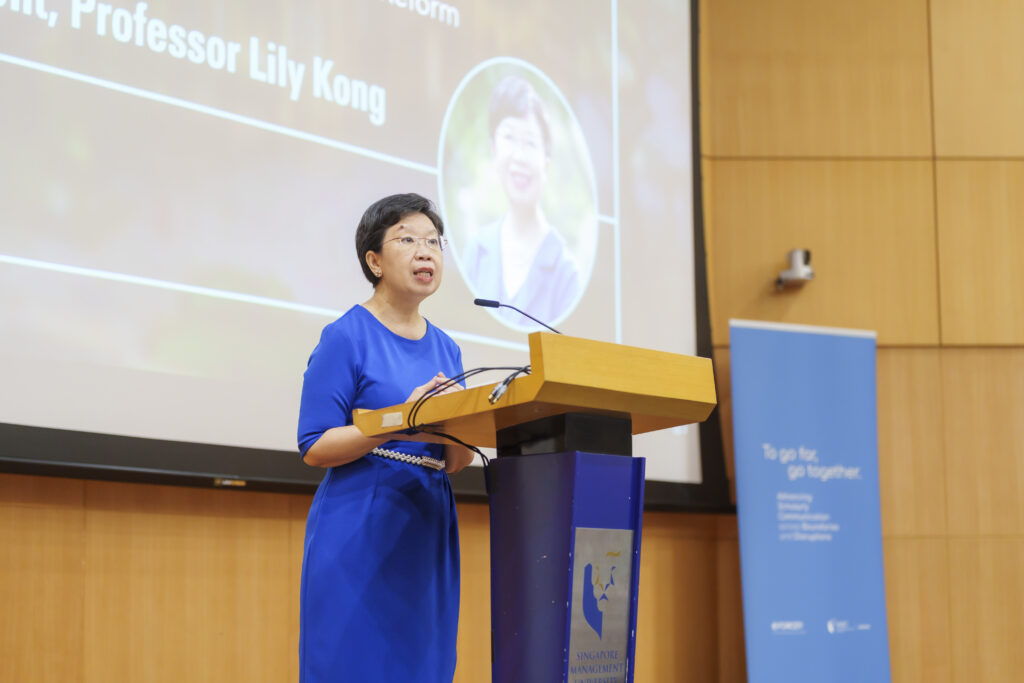
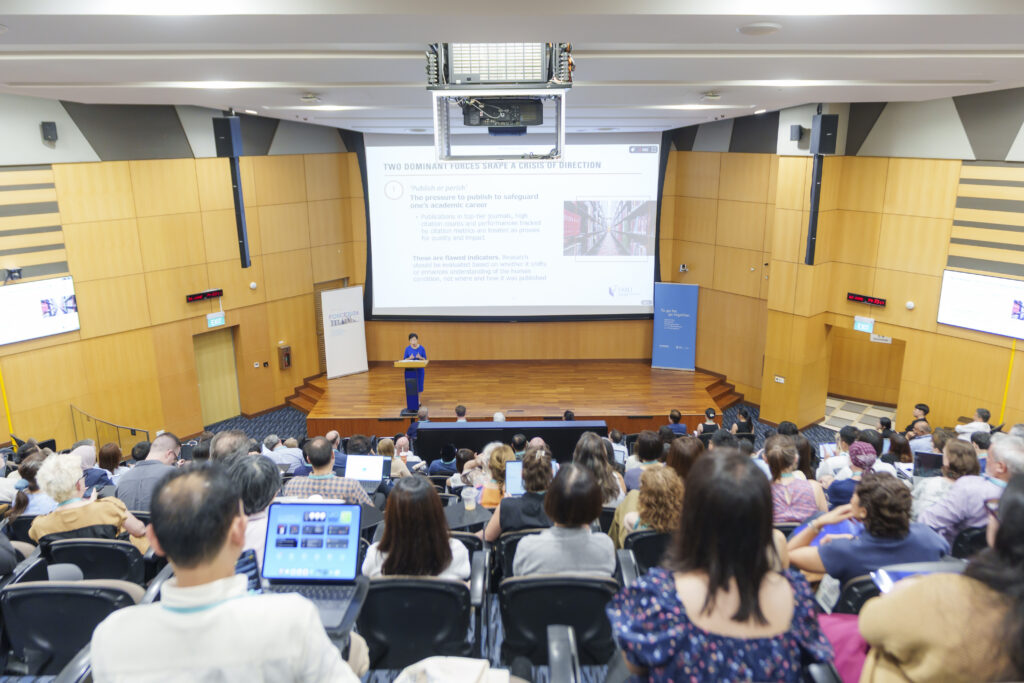
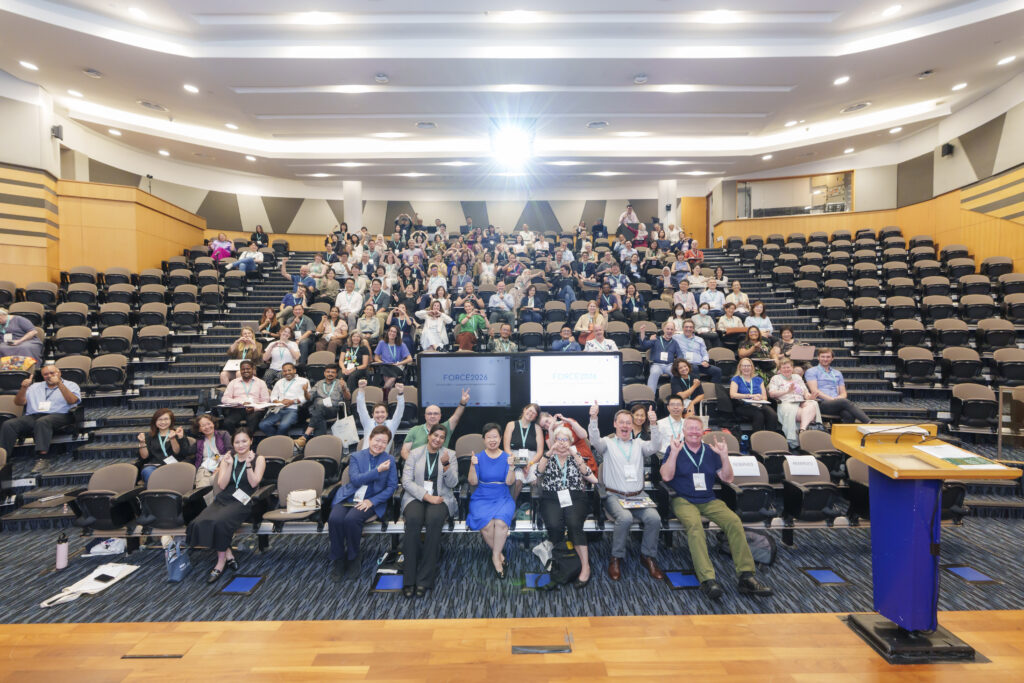
At the 11th Annual FORCE Conference in Singapore, Professor Lily Kong, President of Singapore Management University, delivered the opening keynote on the urgent need to move research assessment reform from critique to implementation.
Her address, From ‘Publish or Perish’ to Purpose and People: Going Together on Research Assessment Reform, argued that the limits of publication-driven evaluation are now widely recognised — but that recognition alone changes little. Institutions must build the structures and cultures that allow a fuller range of academic contributions to be valued.
Professor Kong cautioned against what she termed additive reform: layering societal impact, public engagement and interdisciplinarity onto existing publication pressures, so that each new dimension becomes another expected performance layer. The alternative is not more indicators but a plural conception of excellence — one that recognises rigorous scholarship, teaching, translation, public engagement and societal contribution as parts of a wider ecology of academic work, without expecting every scholar to do everything.
Reflecting on the human consequences of current systems, particularly for early-career researchers, she urged institutions to “measure in ways that illuminate rather than distort”. She further called for the building of organisational capacity that supports societal contribution intentionally, rather than treating it as an afterthought.
Watch Professor Kong’s keynote, or read the full keynote here.
Professor Kong reflects on the urgent need to reform research assessment, move beyond narrow metrics, and build systems that recognize the full ecology of academic work and societal contribution.
Key takeaways for the community
🎯 It is easy to pursue misaligned goals.
Academia has increasingly come to chase misplaced goals driven by “publish or perish” pressures and the race for global university rankings. When institutions optimise for prestige economies and narrow quantitative standards, they risk creating a deep imbalance between a university’s teaching responsibilities, societal impact and research.
⚠️ We are in a human and ethical crisis.
This metrics-driven environment is not simply an administrative misalignment. The intense pressure to publish has bred dark corollaries: mistreatment, misconduct such as P-hacking and data fabrication, and manipulation such as citation cartels. Beyond the damage to the scholarly record, it takes a severe toll on the mental health, wellbeing and financial security of early-career researchers.
💡 Let’s measure in ways that illuminate rather than distort.
While conventional metrics remain useful for tracking academic visibility, they miss how research travels beyond academia. The challenge is not simply to add more KPIs and multiply the pressure on researchers, but to embrace a portfolio approach that recognizes the full ecology of academic work, from rigorous scholarship to translational influence and civic engagement.
🗣️ Impact has to be organised for, not merely exhorted.
Changing research culture requires more than rhetoric, aspiration or goodwill. If universities want to recognise a fuller range of academic contributions, they must build the conditions that make such work possible: leadership commitment, institutional support, communities of practice, and ways of giving language and evidence to impact. SMU’s Office of Impact offers one example of this institutional work, supporting researchers as they articulate, evidence and strengthen the pathways between scholarship and societal contribution. In this sense, reform is not only about what universities value, but how they organise themselves to sustain those values over time.
Professor Kong’s final message echoed the conference theme: no university can reform research culture alone. Change requires alignment across the entire system — funders, publishers and institutions — if we are to stop rewarding flawed indicators and start supporting human flourishing.