

To celebrate its 13th anniversary, DORA is excited to introduce its new resource: A Practical Guide to Implementing Responsible Research Assessment at Research Funding Organizations. Co-developed with the Global Research Council Responsible Research Assessment Working Group (GRC RRA WG) and Science Europe, this Guide is designed as a flexible “one-stop-shop” to help public and private funding agencies to explore and actively implement and monitor responsible research assessment (RRA) strategies.
The Guide has been designed in synergy with the GRC’s RRA Self-Assessment Tool for Funders, a co-developed diagnostic tool that enables funders to self-assess their processes and plan for more structured implementation of RRA aligned with global practices.
To mark this milestone and gather global perspectives on funding practices, we hosted three virtual launch events across the Americas, Asia-Pacific, and Africa & Europe regions. The Practical Guide was also formally introduced in-person at the 14th GRC Annual Meeting in Bangkok, Thailand, which marked the formal launch of the GRC’s Self-Assessment Tool. You can read about the events and the tools below.
Global Launch Events: Regional Perspectives on Implementing RRA
To introduce the Guide and explore how RRA is being addressed by funders worldwide, DORA co-hosted three regional launch events alongside the GRC RRA WG and Science Europe. These sessions featured experts from funding organizations, issue advocates, and policy leaders who shared their insights, challenges, and aspirations for research assessment reform. Across these events, several common themes emerged: the critical need for engaged leadership, the importance of training peer reviewers to assess broader criteria, the necessity of connecting RRA to interconnected movements like open science and equity, diversity, and inclusion (EDI), and the challenge of navigating cultural resistance within the research community. The conversations also highlighted that, while funders operate in vastly different landscapes, global coordination and shared learnings are vital for driving systemic change.
The Americas launch event, co-hosted by DORA Co-Chair Kelly Cobey (University of Ottawa, Canada) and GRC RRA WG Co-Chair Shawn McGuirk (NSERC, Canada), featured a panel of experts including Olival Freire Jr. (CNPq, Brazil), Emily Ford (Open Research Funders Group), and Ana Denicola (Universidad de la República, Uruguay). The panelists discussed the practical steps their organizations are taking and explored the distinct realities of national agencies and the unique agility of private philanthropies.
Olival Freire Jr. highlighted the sheer scale of the Brazilian system, where the agency must select roughly 6,000 fellowships annually. He discussed the practical steps Brazil is taking, such as the introduction of the súmula curricular, a narrative format to evaluate researchers’ main contributions over the past five years, alongside bold affirmative action initiatives specifically for Black and Indigenous women. He acknowledged the cultural resistance to moving away from quantitative metrics but underscored the value of global solidarity:
“Science has been a very successful enterprise for humankind… to change such a successful culture is not an easy task but, when you feel that you are not alone, this makes things easier.” – Olival Freire Jr.
Ana Denicola contrasted this with Uruguay’s smaller scientific community, which struggles with reviewer burnout and significant gender disparities, where caregiving responsibilities disproportionately delay women’s careers. She shared that Uruguay is turning to partial narrative CVs to allow researchers to properly contextualize both their accomplishments and to better evaluate diverse career paths and properly account for career breaks, especially those disproportionately affecting women:
“Implementing a narrative CV… is a way of giving the opportunity of the researcher to focus… on some points on the CV that actually took a lot of effort… or represents a really big accomplishment.” – Ana Denicola
Emily Ford emphasized that private funders view RRA and open science as inextricably linked, as both are required to maximize the impact and transparency of research dollars. They are highly motivated to ensure their investments achieve maximum real-world impact, which cannot happen behind a “veil of opacity”, and therefore are innovating rapidly to provide training, clear reporting guidelines, and resources that foster researcher success rather than acting punitively. She highlighted the power of continuous advocacy and connection:
“No action is too small… making that one-on-one connection, a human connection around these issues, I think is going to keep us energized to continue the good work to move this forward.” – Emily Ford
Co-hosted by DORA Co-Chair Ginny Barbour (QUT, Australia) and GRC RRA WG Member Grace Estillore (DOST PCIEERD, Philippines), the Asia-Pacific session featured Mark Stagg (Royal Society Te Apārangi; Aotearoa New Zealand) and Lee Harris (Australian Research Council). The panel highlighted how implementing RRA strengthens the “social contract” and public trust by ensuring that research funding is distributed fairly and equitably.
Grace Estillore pointed out that the Guide is especially helpful in the Global South and the Asia-Pacific region, which encompasses a mix of well-resourced and developing research systems. In the Philippines, assessment is intentionally aligned with societal impact and national needs through early stakeholder consultations, and the incorporation of multi-tiered reviews.
“The guide acts as a road map as well as a bridge. So it helps Asia-Pacific systems improve together in ways that are both globally aligned but at the same time locally relevant.” – Grace Estillore
Lee Harris highlighted that in Australia, the dispersal of funding makes systemic change slower, requiring funders to collectively align to achieve meaningful scale. He stressed that responsible assessment strengthens the social contract with the public and must be connected to other systemic elements like open access data and persistent identifiers to accurately curate research. He noted that the new Guide provides a fundamental baseline for policy discussions:
“It does facilitate a shared basis of understanding across stakeholders about what research assessment is and what it looks like and also helps explain why change is needed and most importantly what it looks like in practice.” – Lee Harris
Mark Stagg noted that Aotearoa New Zealand is currently undergoing major science system reforms, making it a critical time to embed RRA. He emphasized the profound importance of integrating Indigenous viewpoints, such as the Vision Mātauranga policy, and ensuring that assessment budgets directly support Māori aspirations and knowledge bases. He emphasized that while systemic reform takes time, the Guide offers clear pathways:
“This is a journey that you can follow on. This is the starting point for some… it’s got the starting points and how to get better. And that’s really a great sort of message to take home, on how we can improve what we do.” – Mark Stagg
The final event, co-hosted by DORA Vice-Chair Rebecca Lawrence (F1000) and Secretary General Lidia Borrell-Damián (Science Europe), brought together Annalisa Montesanti (Health Research Board, Ireland), Karen Skytte Larsen (Villum Foundation, Denmark), and GRC RRA WG Co-Chair Nosisa Dube (National Research Foundation, South Africa), and showcased how funders are tackling deeply ingrained evaluation cultures, historical inequalities, and the need for public-private alignment.
Nosisa Dube highlighted how South Africa uses RRA to redefine value, intentionally addressing historical inequalities by promoting equity, diversity, and inclusion (EDI). The NRF has introduced an Impact Award and an engaged research framework to explicitly connect science with societal impact, moving away from university-set quantitative metrics.
“RRA moves us beyond the narrow matrix to a holistic research evaluation system that recognizes a full range of contributions to policy influence, community engagement, open data, and capacity building.” – Nosisa Dube
Annalisa Montesanti discussed how the HRB has pioneered a hybrid narrative CV since 2016 to better capture the diverse, non-linear career trajectories typical in health and social care research. She cautioned that these qualitative formats demand significant investment in reviewer training to ensure consistency and prevent evaluators from reverting to familiar publication metrics.
“Generally speaking, it’s a fairer, more meaningful approach to assessment and many researchers think that they can definitely recognize different career paths… So it really broadens what we value … not just focused on what has been, for many years, publication only.” – Annalisa Montesanti
Karen Skytte Larsen detailed the distinct perspective of a private funder and noted that young researchers are eagerly demanding a rapid revolution in assessment cultures. She shared how the reform movement has successfully brought public and private funders together in Denmark, to openly discuss and align their criteria and practices.
“Focusing on reforming research assessment has really, actually brought people more together. For instance, we only just started as a private funder to meet with public funders… talking about: how do we approach committees? How do we set up responsible CV templates?” – Karen Skytte Larsen
Resources shared during the events
New resources
- The Practical Guide for Research Funding Organizations: https://sfdora.org/resource/rfo-practical-guide/
- GRC RRA Self-Assessment Tool: https://globalresearchcouncil.org/about/responsible-research-assessment-working-group/self-assessment-tool/
- GRC RRA Working Group: https://globalresearchcouncil.org/about/responsible-research-assessment-working-group/
- 5 new case studies based on GRC RRA WG library: https://sfdora.org/dora-case-studies/
- RFO Guide Informational Briefs: https://sfdora.org/resource/practical-guide-for-rfos-informational-briefs/
- RFO Guide quick-reference sheets: https://sfdora.org/resource/practical-guide-for-rfos-quick-reference-sheets/
Examples
- Open Research Funders Group: https://www.orfg.org
- HHMI preprint: Realigning Incentives in Biomedical research: https://zenodo.org/records/19600714
- ASAP Open Science Handbook: https://zenodo.org/records/13769766
- American Heart Association Example data plans: https://professional.heart.org/en/research-programs/awardee-resources/sample-data-plans
- Michael J. Fox Foundation Open Science Policy: https://zenodo.org/records/19863839
- Distributed Peer Review (DPR) at the Volkswagen Foundation: https://www.volkswagenstiftung.de/en/distributed-peer-review-dpr-how-it-implemented-volkswagen-foundation
- Statement of principles endorsed by the Global Research Council last year, on research management in the era of AI: https://globalresearchcouncil.org/fileadmin//documents/GRC_Publications/SoP_2025_Research_Management_AI_EN.pdf
On Narrative CVs
- NWO evidence-based CV: https://www.nwo.nl/en/evidence-based-cv
- Canadian Tri-agency narrative-style CV: https://nserc-crsng.canada.ca/en/funding/research-partnerships-and-collaborations/inter-agency/tri-agency-cv
- HRB narrative-CV, which includes surveys of users’ experiences: https://www.hrb.ie/funding/responsible-research-assessment/hrb-narrative-style-cv/
- On narrative CVs, these resources might be of interest: https://www.cam.ac.uk/research/research-at-cambridge/culture/narrative-cvs-project
- MBIE in New Zealand tested the use of a narrative CV format: https://sfdora.org/case-study/mbie/
Additional resources and references
- DORA’s Guidance on the responsible use of metrics: https://zenodo.org/records/13844873
- Many contributions are hidden from databases (e.g. group/consortium authorship) and also not recognised as authorship of research articles, e.g. https://doi.org/10.1038/d41586-026-01260-x
-
Responsible Research Assessment of Faculty: maximizing quality, transparency, and trustworthiness of scientific researchin Research-Performing Organizations: https://osf.io/preprints/metaarxiv/4qmua_v2
- NOR-CAM: https://www.uhr.no/en/news-from-uhr/nor-cam-a-toolbox-for-recognition-and-rewards-in-academic-careers.5780.aspx
- FIN-CAM: https://vastuullinentiede.fi/en/news/comment-fin-cam-assessment-tool-designed-responsible-assessment-researchers
- NRF Framework for Research Impact: https://www.nrf.ac.za/nrf-framework-to-advance-the-societal-and-knowledge-impact-of-research/
- AGORRA Project from RoRI: https://researchonresearch.org/project/agorra/
- DORA’s sheet on System Biases: https://sfdora.org/resource/rethinking-research-assessment-unintended-cognitive-and-systems-biases/
In-Person Launch at the 2026 Global Research Council Annual Meeting
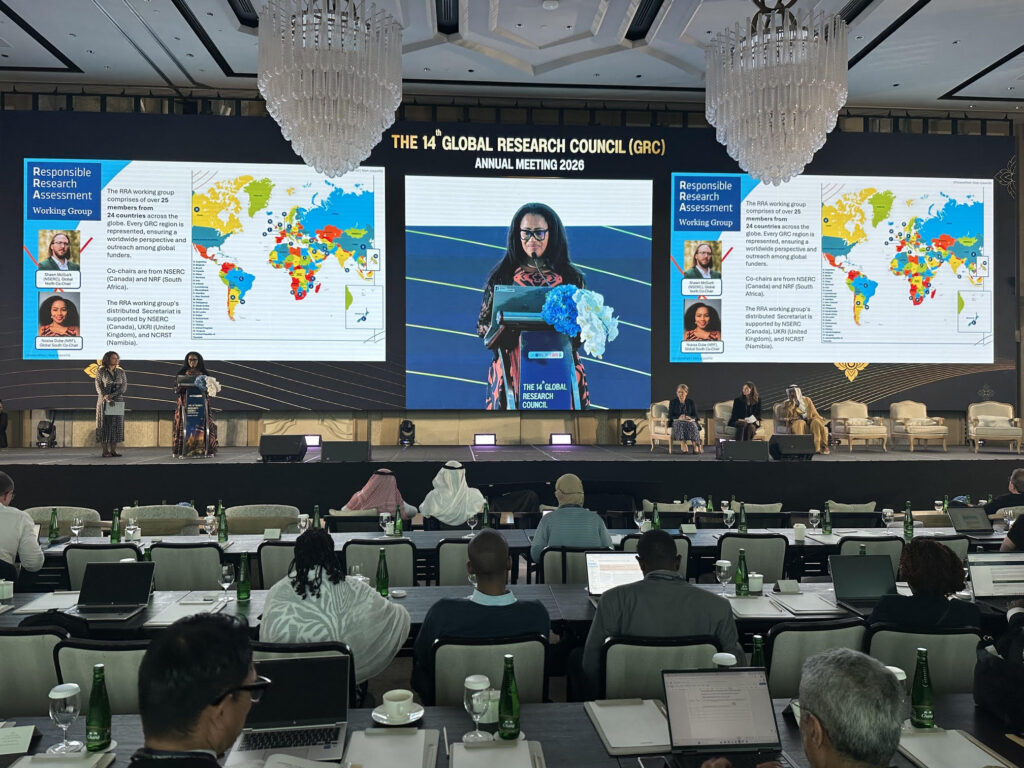
In addition to our virtual regional launches, the Practical Guide and Self-Assessment Tool were formally introduced in person at the 14th GRC Annual Meeting in Bangkok, Thailand. Recognizing that research assessment reform is a global priority, these new resources were prominently featured across the meeting’s agenda to help funders transition from high-level commitments to coordinated action.
The Annual Meeting started with a dedicated side event, co-organized by Science Europe and the GRC RRA Working Group, to explore how research funding organizations can effectively engage with the expanding ecosystem of international assessment reform movements, such as DORA, CoARA, and FOLEC-CLACSO. While the proliferation of these initiatives offers valuable platforms for mutual learning, it also brings potential challenges regarding alignment, prioritization, and the burden of implementation.
Moderated by Lidia Borrell-Damián (Science Europe), the event started with a panel featured insights from Sonja Ochsenfeld-Repp (DFG, Germany), Daniela Perrotta (FOLEC-CLACSO), Nosisa Dube (NRF, South Africa), Osamu Kobayashi (JST, Japan), and Giovanna Lima (DORA).
To capture the pulse of the room, a live Mentimeter survey was conducted with the globally diverse audience, which included representatives from Europe, the Americas, Sub-Saharan Africa, the Asia-Pacific, and the Middle East and North Africa (MENA) region. The results illustrated a strong and active commitment to responsible research assessment:
- Attendees rated responsible research assessment as a highly important strategic priority for their funding agencies
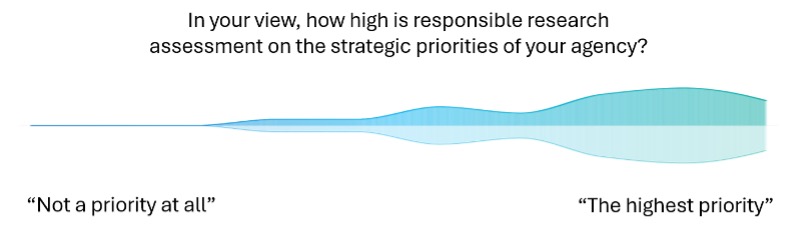
- The vast majority of respondents indicated that their organizations are already engaged in ‘more than one’ international RRA initiative.
- Participants noted high engagement with existing GRC resources, most notably the 2020 report “The changing role of funders in responsible research assessment” and the 2025 “Transforming Assessment” report which were co-developed with the Research on Research Institute (RoRI).
During the interactive mapping and subsequent breakout discussions, a clear theme emerged regarding the future: there is a strong desire for the GRC and its RRA Working Group to act as the convener for a “network of networks” for public funding agencies around the world.
The value of a “network of networks” was strongly reinforced during the breakout discussions. Participants emphasized that RRA is critical for international collaboration and for moving beyond narrow quantitative metrics toward more equitable and holistic approaches. Engagement in global initiatives was seen as enabling shared learning, the development of common standards, and strengthening policy influence, legitimacy, and the overall quality of research assessment systems.
At the same time, participants highlighted several persistent challenges, including cultural resistance within the research community, resource and capacity constraints, coordination difficulties, the need to adapt to fast-changing research environments, concerns about reinforcing existing inequities, and concerns of inadvertently increasing burden on researchers, reviewers, and funders. The GRC is well positioned to help address many of these challenges, by convening global dialogue and fostering peer learning through a network of networks—minimizing duplication across existing initiatives and networks while advancing stronger global coordination and alignment.
When surveyed on the added value that the GRC could provide moving forward, respondents emphasized that the GRC should continue many of the efforts already underway through the RRA Working Group — focusing on sharing good practices, convening different networks, and driving convergence in principles and approaches across the globe. By coordinating across these global initiatives, the GRC and its RRA Working Group can provide a stable community of practice for funders to navigate challenges as principles are translated into everyday practice.
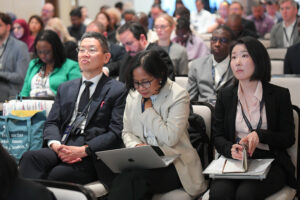
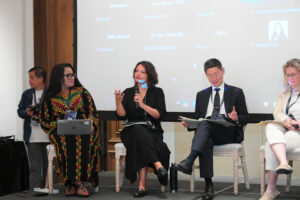
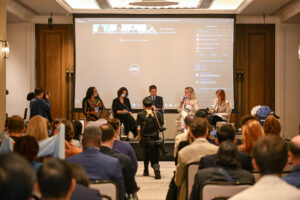
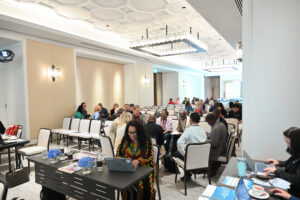
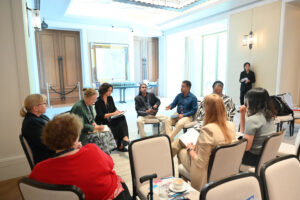
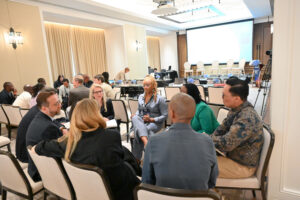
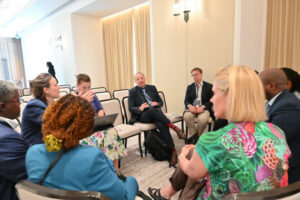
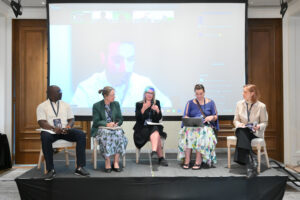
During the main event, the theme of actionable reform was reinforced in a joint plenary presentation by Nosisa Dube (GRC RRA WG Co-Chair, NRF South Africa) and Giovanna Lima (DORA Program Manager). Their presentation on the contributions of the GRC RRA WG “From dialogue to action” highlighted how the new suite of co-created resources works as a comprehensive toolkit to enable the implementation of RRA by funders.
They demonstrated the complementary nature of both new tools: funding organizations are encouraged to use the new GRC RRA Self-Assessment Tool for Funders to reflect on their current governance and evaluation practices, and to identify organizational gaps. Once areas for improvement are identified, funders can then turn to DORA’s Practical Guide to explore concrete, tested interventions and case studies from peer organizations to address those specific needs. Furthermore, the presentation underscored that RRA cannot be viewed in isolation; it is deeply interconnected with broader systemic goals, such as advancing Open Science and Research for Sustainable Communities, which were central themes of the 2026 Annual Meeting.
About the Practical Guide
The Practical Guide to Implementing Responsible Research Assessment at Research Funding Organizations is designed for a broad audience, including funding agency leadership, policy leads, program managers, and grant administrators. It provides practical advice, tools, and examples for embedding RRA into the policies and workflows used across the research funding lifecycle, from establishing calls to making funding decisions and monitoring grants.
Recognizing that research funders vary widely in size, focus, and geographical context, the Guide is not intended to be prescriptive; we encourage organizations to use it flexibly, drawing upon the pieces that are most relevant to their specific environment.
We would like to warmly thank the GRC RRA WG and Science Europe for their close partnership in developing this Guide, and for Science Europe’s financial contribution to it. We are also deeply grateful to Aalborg University and the CeRRA Conference organizers for hosting the Copenhagen side event, which provided a rich space for dialogue and co‑creation. And our special thanks go to all participants of the December 2025 workshop, to the GRC participant organizations who contributed to the Guide through discussions across its regional meetings, and to members of DORA’s Funder Groups, whose engagement across multiple co‑creation sessions both in person and online has been instrumental in shaping this resource. As always, all of this could not be possible without DORA’s staff, especially Liz Allen, and DORA’s Steering Committee and funding organizations.
Please reach out to info@sfdora.org if we can answer any questions or to share how you are using this resource in your organization.
About the GRC RRA Self-Assessment Tool for Funders
The Responsible Research Assessment (RRA) Self-Assessment Tool for Funders is a new resource developed by the Global Research Council’s RRA Working Group, in collaboration with DORA. It acts as a companion to the Practical Guide and is designed to help funding agencies review their current assessment practices, identify gaps, and plan context-specific next steps without needing to start from scratch.
The tool supports RRA implementation at research funding organizations by helping them embed the eleven dimensions of RRA into their policies, processes, and decision-making. Implementation of these dimensions is translated into five implementation stages and a self-assessment questionnaire, that aim to help funders position themselves in their journey toward implementing RRA practices while recognising the diversity of funders across the global funding landscape. Accordingly, the tool has been designed to be adaptable to different local contexts and organisational priorities.
This tool is intended for staff at funding organisations who are directly responsible for the development, monitoring, and evaluation of research assessment processes. By working through the questions in the self-assessment questionnaire, funding organisations can situate their practices and policies across each dimension and identify areas for improvement.
We extend our sincere thanks to Science Europe and DORA for their strong collaboration in co‑developing the Guide and Self‑Assessment Tool. We are especially grateful to the panelists for their insightful contributions and to all participants for the richness of the discussions and the diversity of perspectives shared. We also wish to recognize the dedicated efforts of all members of the RRA Working Group, whose ongoing commitment continues to advance this important global priority, as well as the continued engagement of GRC participant organizations and of the GRC’s Equality, Diversity and Inclusion (EDI) and Multilateral Engagement (MLE) Working Groups. Their contributions have been invaluable in ensuring that these resources are globally relevant and context‑sensitive. These resources and events would not have been possible without the collective expertise, collaboration, and commitment of all involved.
If you would like to know more about the activities of the GRC Responsible Research Assessment Working Group, please contact GRC-RRA@ukri.org.